Inside a Day That Reshaped a Community and Sparked an International Search for Answers
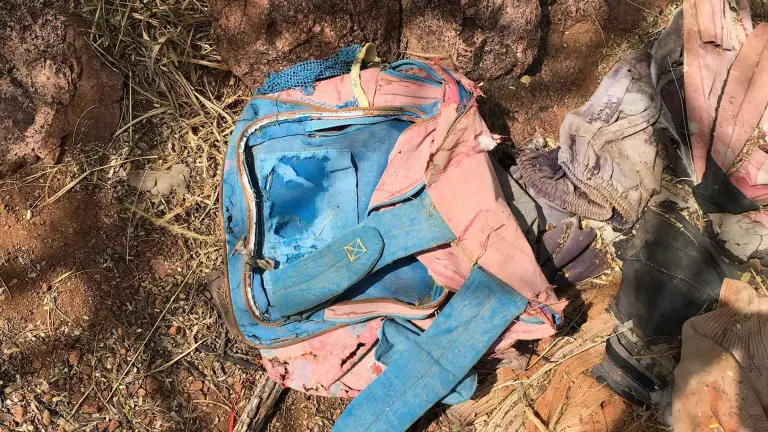
The morning began quietly in Minab, a coastal city where routine is a form of resilience. By midday, the community was confronting an event that would reverberate far beyond its borders, prompting scrutiny from analysts, legal experts, and families seeking clarity. What unfolded in those hours has since become the center of an international debate over responsibility, transparency, and the fragile line between official narratives and independently verified evidence. In the days that followed, Minab became not only a place of mourning but a focal point in a broader conversation about truth, accountability, and the systems meant to protect civilians in times of conflict.
A City Interrupted
Minab is a place defined by its rhythms. Markets open early. Families walk children to school. Teachers prepare lessons in buildings that have stood for generations. The events of that morning disrupted not only the physical landscape but the emotional architecture of a community that had long lived between hope and uncertainty. In the hours that followed, residents searched for answers while officials issued statements that raised more questions than they resolved.
For many in Minab, the immediate aftermath was marked by confusion. Communications were inconsistent. Local authorities struggled to provide clear information. Families attempted to piece together what had happened through phone calls, neighborhood networks, and the limited details released by officials. The absence of clarity deepened the sense of disorientation, leaving residents to navigate a landscape where facts were scarce and speculation filled the void.
A Narrative That Shifted Before Facts Emerged
Within minutes of the incident, political leaders offered explanations that diverged sharply from what independent analysts would later examine. Statements were issued with confidence but without supporting evidence. Assertions were made before investigators had reached the scene. The speed of the narrative contrasted with the slow, methodical work of verification that would follow, revealing a gap between official claims and the emerging picture built from satellite imagery, expert analysis, and eyewitness accounts.
This pattern — rapid political messaging followed by delayed or incomplete transparency — is not new. In past cases across the region, early statements have often been shaped by political considerations rather than confirmed facts. Analysts who reviewed the initial responses to the Minab incident noted that the language used mirrored previous situations where governments sought to control the narrative before independent investigations could begin.
The result was a public conversation shaped more by competing claims than by verified information. As the official narrative shifted, residents and observers alike questioned why explanations were being revised and why key details remained unavailable.
The Work of Independent Verification
In the absence of clear, consistent information, independent investigators began reconstructing the timeline. Analysts reviewed satellite images taken before and after the event. Specialists examined structural patterns, environmental signatures, and the physical footprint left behind. OSINT researchers authenticated videos, geolocated footage, and compared visual markers with known data. Their findings did not align neatly with early political statements, prompting renewed scrutiny and calls for transparency.
The verification process was slow, deliberate, and grounded in evidence. Satellite imagery provided a broad view of the area, allowing analysts to identify changes in the landscape and assess the plausibility of competing explanations. Geolocation techniques helped confirm where certain videos were recorded, while metadata analysis offered clues about when they were captured. Structural experts examined the physical characteristics of the site to determine what could — and could not — be inferred from the available evidence.
This multi‑layered approach revealed inconsistencies in the early official narrative. While investigators stopped short of drawing definitive conclusions, their findings raised questions that officials had not addressed. The discrepancies underscored the importance of independent verification in contexts where political interests may influence the release of information.
A Community Left With Questions
For families in Minab, the search for answers has been as emotional as it is factual. They have asked for clarity, accountability, and acknowledgment. They have asked why explanations arrived before investigations. They have asked why the burden of truth‑finding fell on journalists, analysts, and residents rather than those with access to official intelligence. Their questions remain at the center of this investigation, shaping the urgency behind every detail examined.
Community leaders have called for a transparent inquiry, emphasizing that the people of Minab deserve a full accounting of what happened. Local organizations have documented testimonies, collected available evidence, and attempted to preserve the historical record. Their efforts reflect a broader determination to ensure that the incident is neither forgotten nor misrepresented.
For many residents, the lack of clear answers has compounded their grief. They want to understand not only what happened but why it happened — and whether it could have been prevented. Their calls for accountability are rooted in a desire for justice, but also in a hope that future tragedies might be avoided.
Patterns Seen in Other Conflicts
The questions raised in Minab echo patterns documented in other regions where civilian communities have been caught in the middle of military operations. In Yemen, Afghanistan, and Iraq, independent investigations have previously uncovered discrepancies between early official statements and later evidence‑based findings. In several of those cases, initial denials were followed by revised explanations once satellite imagery, field interviews, and forensic analysis became public. Internal reviews were launched but rarely released in full. Accountability often remained limited.
In Yemen, for example, investigations by international organizations and independent journalists revealed that early official accounts frequently omitted key details or contradicted later findings. In Afghanistan, several high‑profile incidents prompted internal reviews that were not fully disclosed, leaving families without a clear understanding of what had occurred. In Iraq, analysts documented cases where initial statements were later revised after independent evidence emerged, highlighting the challenges of relying solely on official narratives.
These past investigations share common elements: rapid political messaging, delayed transparency, and a reliance on external analysts to reconstruct events. Minab now sits within this broader historical context, where the search for clarity has frequently depended on independent verification rather than official disclosure. The parallels do not imply identical circumstances, but they underscore the importance of rigorous, evidence‑based inquiry in situations where civilian communities are affected.
Legal and Ethical Implications
International law places strict protections on civilian spaces and demands rigorous justification for any action that risks harm to noncombatants. When events occur under unclear circumstances, the responsibility to investigate thoroughly becomes even more critical. Legal experts examining the Minab case have emphasized the importance of independent review, the preservation of evidence, and the need for public disclosure of findings. The questions raised here extend beyond one incident; they speak to the global standards that govern the use of force and the protection of civilians.
Ethical considerations also play a central role. Transparency is essential not only for accountability but for maintaining public trust. When official narratives shift or remain incomplete, communities may lose confidence in the institutions meant to protect them. Independent investigations help fill this gap, providing a measure of oversight in contexts where political interests may influence the release of information.
Legal scholars note that the Minab case highlights the need for clear protocols governing the investigation of incidents involving civilian areas. These protocols should include timely evidence collection, independent oversight, and public reporting of findings. Without such measures, the risk of misinformation, confusion, and mistrust increases.
Why This Investigation Matters
The significance of this investigation lies not only in what happened but in what it reveals about the systems meant to prevent, explain, and account for such events. It highlights the tension between rapid political messaging and the slower, more deliberate process of fact‑finding. It underscores the role of independent journalism and analysis in moments when official narratives are incomplete. And it reflects the determination of a community unwilling to let uncertainty become the final word.
Minab is not the first place where residents have demanded clarity in the face of conflicting accounts, and it will not be the last. But the attention the case has received — from analysts, legal experts, and international observers — suggests a growing recognition of the need for transparency and accountability in contexts where civilian communities are affected.
The investigation also serves as a reminder of the importance of preserving evidence, documenting testimonies, and maintaining a clear historical record. In an era where information can be manipulated or obscured, the work of independent verification becomes essential.
Closing Statement
The story of Minab is still unfolding. Evidence continues to be examined. Families continue to seek clarity. Analysts continue to review data that may reshape the understanding of what occurred. This investigation does not claim to offer the final answer. It offers a record of what is known, what remains contested, and what demands further scrutiny. In a world where information moves quickly and accountability often moves slowly, the work of documenting, questioning, and verifying becomes essential. Minab deserves nothing less.
About The Author