“By Luxlexa Team”
Overview
The Iran–US–Israel war has had a profound and multi‑layered impact on human rights inside Iran—far beyond the immediate battlefield. The twelve days of large‑scale Israeli airstrikes on Iranian territory in June 2025, followed by Iran’s internal crackdown, created overlapping crises: mass casualties, destruction of essential infrastructure, intensified repression, and a sharp deterioration in due process and civic space.
What follows is a focused, rights‑based analysis of that impact, grounded in documented statistics and human‑rights reporting.
1. Civilian casualties and physical integrity rights
Scale of deaths and injuries
Human Rights Activists in Iran (HRANA) documented at least 5,665 casualties from Israeli airstrikes over twelve days—1,190 killed and 4,475 injured, both military and civilian.
A separate rights group, Hengaw, reported 1,082 people killed, including 182 civilians and 900 military and security personnel, across 28 affected provinces.
The UN High Commissioner for Human Rights warned that “widescale, continuing attacks by Israel across Iran, and the missile and drone strikes launched in response by Iran, are inflicting severe human rights and humanitarian impacts on civilians.”
Civilian protection under international law
These casualty figures raise serious concerns under international humanitarian law (IHL):
• Distinction: Attacks must distinguish between military targets and civilians. The documented deaths of hundreds of civilians, including women and children, suggest possible failures of distinction or proportionality.
• Proportionality: Even when military targets are present, expected civilian harm cannot be excessive relative to anticipated military advantage. The scale and geographic spread of strikes across 28 provinces make proportionality assessments central to any future accountability process.
2. Destruction of infrastructure and economic/social rights
Damage to essential services
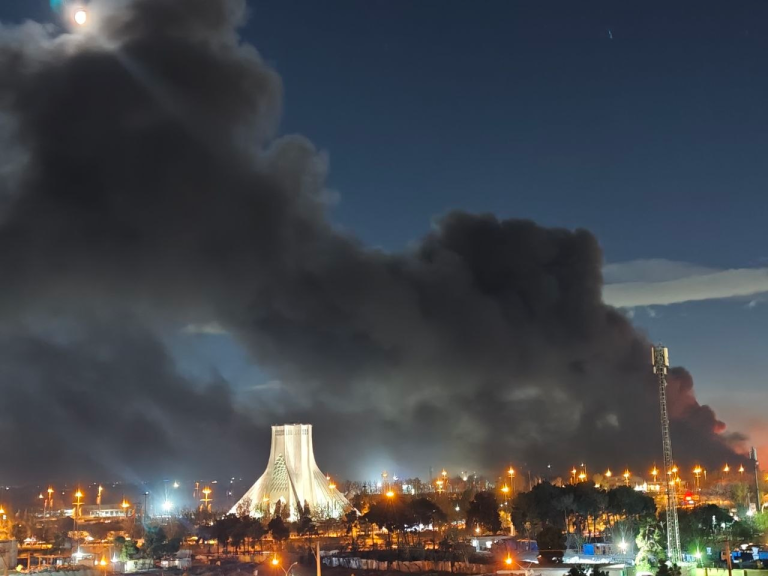
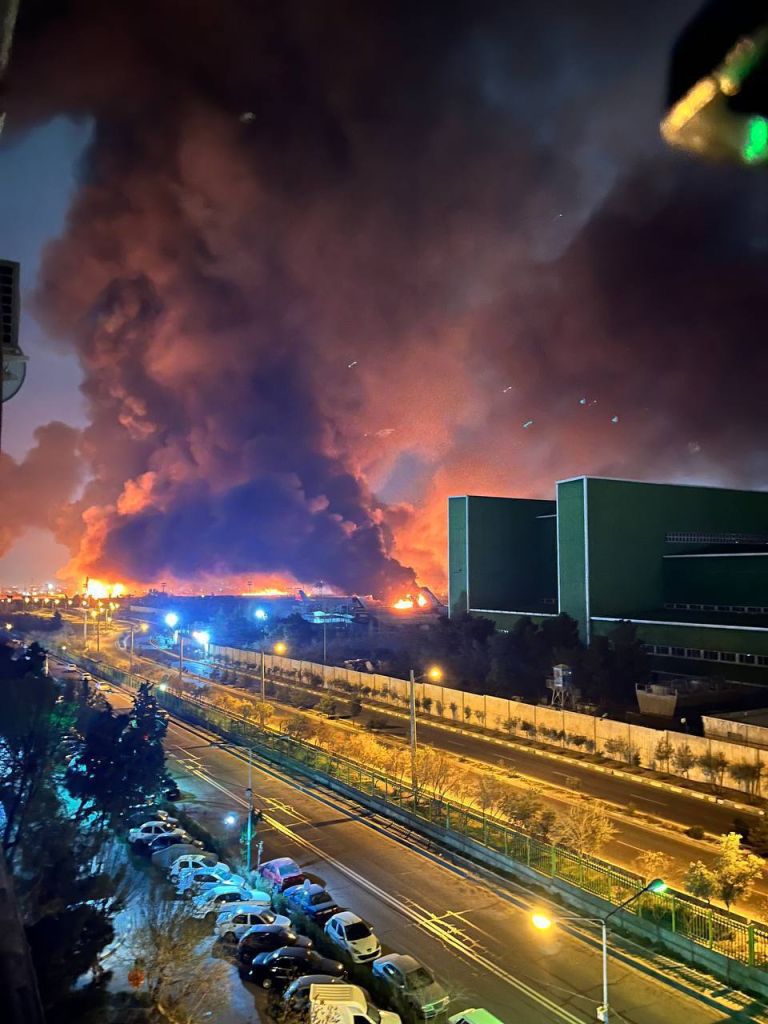
HRANA’s comprehensive report notes that the airstrikes caused “severe damage to critical military, civilian, medical, and emergency infrastructure,” posing a serious threat to the safety of citizens nationwide.
This destruction directly undermines:
• Right to health: Damage to hospitals, clinics, and emergency services limits access to urgent care for the wounded and for people with chronic conditions.
• Right to water, sanitation, and housing: Strikes affecting power grids, water systems, and residential areas disrupt basic living conditions, especially for low‑income communities.
Humanitarian toll and displacement
The UN warned of a “mounting humanitarian toll” and risk of mass displacement as hostilities continued, emphasizing that both Iran and Israel remain bound by IHL.
While precise displacement figures are still evolving, the combination of destroyed housing, damaged infrastructure, and ongoing insecurity has pushed many families into temporary shelters or internal displacement, with particular vulnerability for children, older people, and people with disabilities.
3. Internal repression and civic space inside Iran
Post‑war crackdown
The war did not only bring external violence; it also triggered intensified internal repression. HRANA documented 1,596 arrests by Iranian security forces during the twelve‑day conflict period alone.
Later, the UN Fact‑Finding Mission on Iran reported a “serious deterioration of the human rights situation” after the airstrikes, including a surge in repression and an extraordinary spike in executions.
Key patterns include:
• Mass arrests: Targeting protesters, activists, journalists, and perceived critics under broad national‑security or “propaganda” charges.
• Due‑process violations: Reports of coerced confessions, denial of access to lawyers, and rushed trials before revolutionary courts.
• Executions: The Fact‑Finding Mission highlighted an “extraordinary spike in executions” following the war, further eroding the right to life and fair trial guarantees.
Shrinking civic space
The war provided a pretext for authorities to:
• Tighten control over freedom of expression, including online speech framed as “undermining national security.”
• Restrict freedom of assembly, using emergency and wartime narratives to ban gatherings and protests.
• Intensify surveillance and harassment of human‑rights defenders, women’s‑rights activists, and ethnic minority communities.
This convergence of external conflict and internal repression has left independent civil society with even less room to operate.
4. Vulnerable groups: women, minorities, and border regions
Women and girls
The UN Fact‑Finding Mission links the post‑war period to a broader pattern of gender‑based repression in Iran, including:
• Continued enforcement of compulsory veiling laws.
• Targeting of women’s‑rights activists under security charges.
• Heightened risk of violence and harassment in the context of militarization and displacement.
In conflict zones, women often bear disproportionate burdens—caring for injured relatives, navigating destroyed services, and facing increased exposure to abuse in overcrowded shelters or detention.
Ethnic and border communities
Hengaw’s reporting shows that Kurdish‑majority and other peripheral provinces were heavily affected by strikes and subsequent security operations.
These regions already experience structural discrimination and under‑investment; war‑time damage to infrastructure and intensified security presence deepen existing inequalities and heighten risks of arbitrary arrest, torture, and enforced disappearance.
5. Accountability, documentation, and future risks
Competing casualty narratives
Official Iranian figures and independent rights‑group statistics differ, but all converge on a picture of large‑scale harm:
• Iran’s government reported around 1,100 killed and over 5,600 injured from Israeli airstrikes.
• HRANA and Hengaw provide slightly different totals but confirm similar orders of magnitude and nationwide impact.
These discrepancies underscore the need for independent, international investigations with access to sites, witnesses, and state records.
International mechanisms
The UN Fact‑Finding Mission and the High Commissioner for Human Rights have both called for:
• Full respect for IHL by all parties.
• Independent investigations into alleged violations, including unlawful attacks, arbitrary killings, and excessive use of force in internal crackdowns.
Long‑term human‑rights risks
The war’s impact on human rights in Iran is not limited to the twelve days of open conflict:
• Normalization of emergency rule: Wartime narratives can entrench permanent “exceptional” measures—expanded security powers, censorship, and militarization of governance.
• Trauma and social fragmentation: Large‑scale casualties, displacement, and repression leave deep psychological and social scars, especially among youth who have already lived through protest crackdowns and economic crisis.
• Erosion of trust: When both external actors and domestic authorities violate rights, public trust in institutions—national and international—erodes, making future reform and reconciliation harder.
Direct answer
In statistical terms, the Iran–US–Israel war killed over 1,000 people in Iran, injured more than 4,000–5,000, damaged critical civilian infrastructure across at least 28 provinces, and led to over 1,500 arrests and a documented spike in executions and repression in the months that followed.
In human‑rights terms, it combined external violations of civilian protection with an internal crackdown that further constricted civic space, undermined due process, and deepened structural inequalities—leaving Iran’s population caught between bombs from above and repression from within.
About The Author