“Operational‑Legal, Tribunal“
1. Context and Background
Infrastructure disruption emerged as one of the most consequential drivers of civilian harm during the 2026 Iran war. Although many military operations targeted command‑and‑control nodes, radar systems, or dual‑use facilities, the interconnected nature of civilian infrastructure meant that even limited strikes produced cascading effects on water access, electricity supply, medical services, transportation networks, and communication systems. These disruptions were not incidental anomalies but foreseeable outcomes of operations conducted in proximity to densely populated areas and essential service networks.
Iran, Israel, and the United States each conducted operations that affected infrastructure critical to civilian survival. Strikes on power grids, water‑treatment facilities, telecommunications hubs, and industrial zones produced secondary harm that extended beyond the immediate blast radius. Cyber operations further compounded these effects by degrading emergency response systems and interrupting communication channels. The cumulative impact significantly increased civilian vulnerability, particularly in urban centers and regions already experiencing economic or political instability.
2. Applicable Legal Standards
International Humanitarian Law (IHL)
Infrastructure indispensable to the survival of the civilian population — including water systems, electricity networks, and medical facilities — is protected under Additional Protocol I, Articles 52, 54, and 57. Attacks on dual‑use infrastructure must comply with the principles of distinction, proportionality, and precautions in attack. Parties must refrain from targeting objects whose destruction would foreseeably cause excessive incidental civilian harm relative to anticipated military advantage.
International Human Rights Law (IHRL)
IHRL continues to apply concurrently with IHL. Relevant obligations include the right to life (ICCPR Art. 6), the right to health (ICESCR Art. 12), and the rights of children to survival and development (CRC Arts. 6 and 24). Infrastructure disruption that foreseeably undermines access to essential services may implicate these obligations.
Rome Statute of the International Criminal Court
Article 8(2)(b)(ii) prohibits intentionally directing attacks against civilian objects, while Article 8(2)(b)(iv) prohibits disproportionate attacks causing excessive incidental harm to civilians or civilian objects. Infrastructure disruption may also contribute to crimes against humanity where it forms part of a widespread or systematic attack on a civilian population.
Customary International Law
Customary norms reinforce the protection of objects indispensable to civilian survival, the prohibition of indiscriminate attacks, and the obligation to take feasible precautions to minimize civilian harm. These norms apply to both kinetic and cyber operations.
3. Documented Infrastructure‑Related Incidents
A. Water and Sanitation Systems
17 February — Bushehr: Israeli strikes damaged a water‑treatment facility, disrupting potable water access for surrounding communities.
6 March — Qom: US cruise missiles struck a dual‑use industrial zone, causing chemical runoff that contaminated local waterways.
1 March — UAE desalination corridor: Iranian strikes threatened coastal desalination plants, raising concerns about regional water security.
B. Electricity and Energy Networks
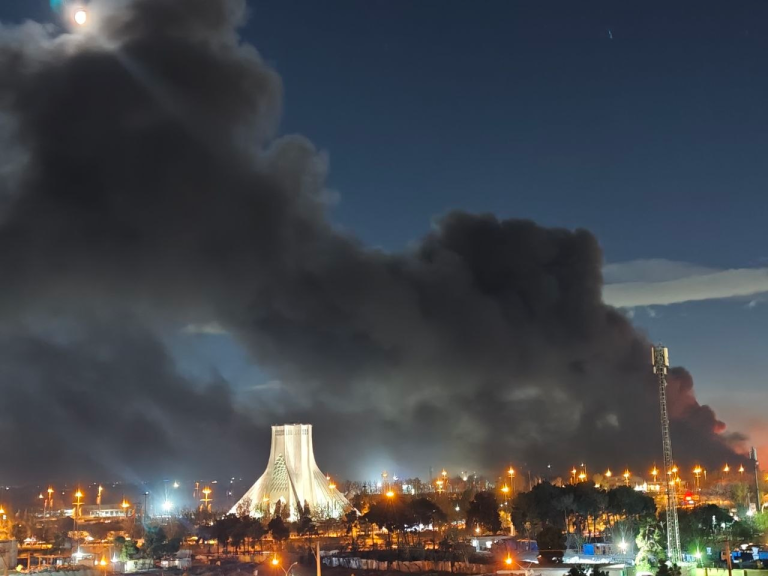
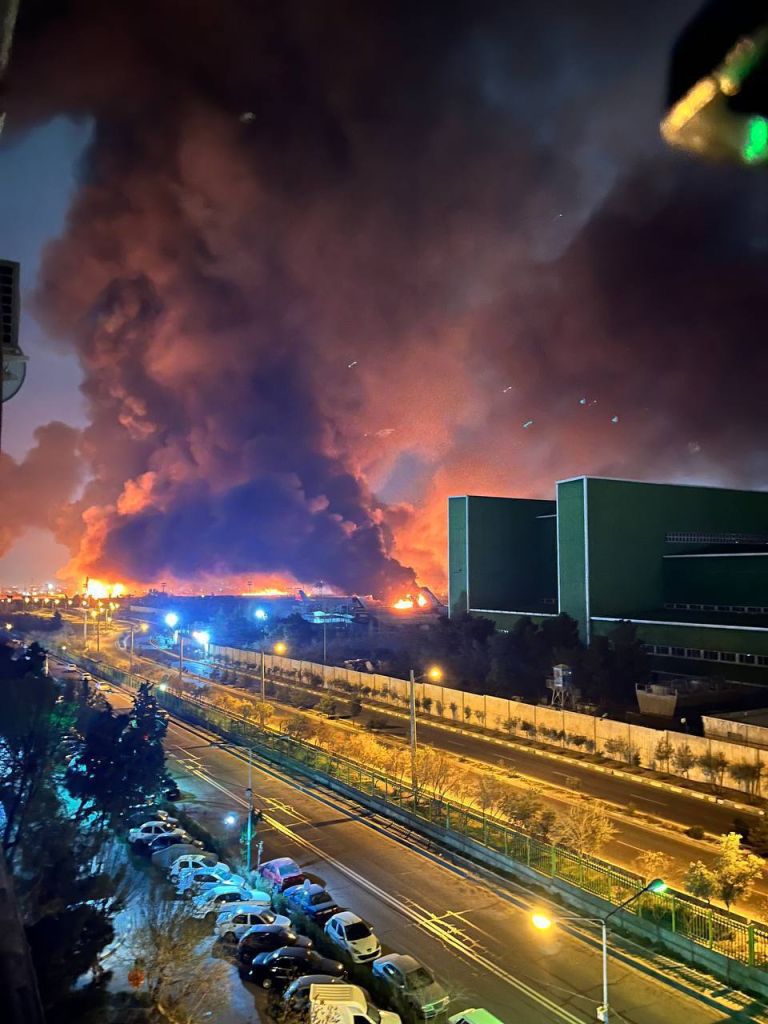
9 March — Isfahan: Strikes on fuel depots caused fires and power outages affecting hospitals and residential districts.
Shiraz and Yazd: Secondary explosions from strikes on command nodes disrupted electricity grids, affecting medical equipment and emergency services.
C. Telecommunications and Emergency Systems
14 February — Nationwide Iran: US cyber operations disrupted emergency communication systems, delaying ambulance response and affecting public safety.
Isfahan telecommunications hub: Damage to a major node interrupted civilian communication networks and emergency coordination.
D. Transportation and Maritime Infrastructure
Strait of Hormuz: Iranian naval actions and drone activity disrupted commercial shipping, affecting fuel supply chains and regional trade.
Haifa Port: Damage to commercial warehouses affected logistics networks and civilian access to essential goods.
4. Pattern Analysis
Infrastructure disruption followed several identifiable patterns:
Dual‑use vulnerabilities: Many military targets were embedded within or adjacent to civilian infrastructure, increasing the likelihood of cascading effects.
Secondary harm: Fires, chemical leaks, and power outages produced harm beyond the immediate strike zone.
Cyber‑physical convergence: Cyber operations amplified the effects of kinetic strikes by degrading emergency response capacity.
Regional interdependence: Maritime and energy disruptions affected multiple states, demonstrating the cross‑border nature of infrastructure harm.
Heightened impact on children: School closures, hospital disruptions, and water contamination disproportionately affected minors.
These patterns underscore the need for integrated assessments of civilian harm that account for both direct and indirect effects.
5. Legal Questions for Competent Bodies
The documented incidents raise several legal questions:
Whether attacks on water‑treatment facilities, power grids, and telecommunications hubs complied with the principles of distinction and proportionality.
Whether cyber operations foreseeably endangered civilians by disrupting emergency systems.
Whether the cumulative effects of infrastructure degradation amount to unlawful attacks on objects indispensable to civilian survival.
Whether environmental contamination resulting from infrastructure strikes should be incorporated into proportionality assessments.
Whether cross‑border infrastructure harm triggers state responsibility under international law.
About The Author